
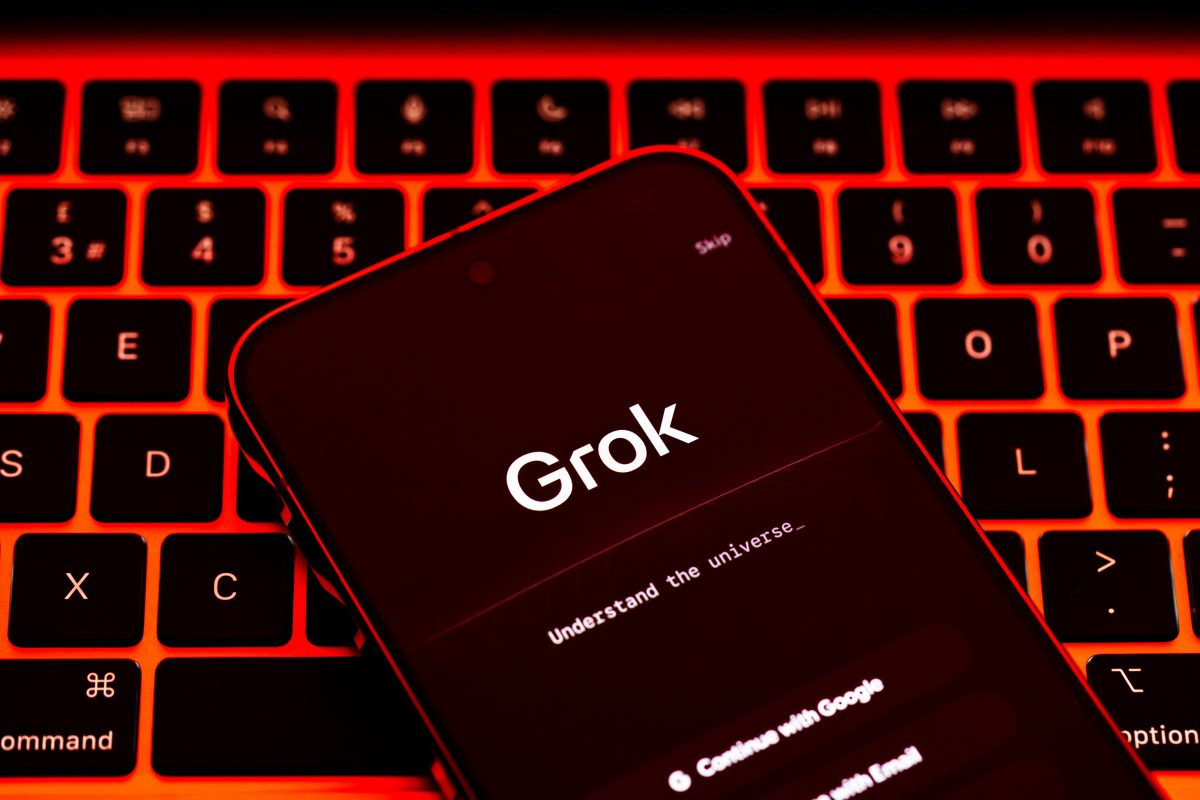
Deepfakes—generative AI-manipulated video, photo, or audio recordings that misrepresent events or individuals—have been widely accessible since 2017.[1] Once the technology became public, it was almost immediately used to produce nonconsensual images of women, and the problem has since worsened.[2] In 2019, 96% of online deepfakes were pornographic; this figure rose to 98% by 2023, with 99% of the individuals targeted in deepfake pornography being women.[3][4] Ashley St. Clair, a conservative political influencer and the mother of Elon Musk’s thirteenth child, is one of the prominent recent victims of such attacks.[5]
On January 15, 2026, Ashley St. Clair filed a complaint in New York state court against xAI, the parent company of the social media platform “X.”[6] St. Clair alleged that Grok, the in-app AI companion, produced nonconsensual pornographic deepfake images of her.[7][8] In response, xAI motioned to remove the case to federal court and additionally filed its own complaint against St. Clair in the Northern District of Texas, alleging that St. Clair violated the X user agreement by initiating a suit in New York.[9][10][11] Despite xAI’s attempt at what may amount to vexatious litigation, there has been a wave of legal action against xAI’s Grok alongside St. Clair’s claims.[12][13][14][15]
Indeed, Grok’s production of nonconsensual deepfakes is not unique to St. Clair. Despite Grok’s “spicy mode” being a feature since last year, Grok began responding to a large number of user requests to produce nonconsensual deepfakes in late December, sparking outrage worldwide.[16] In response, xAI has claimed to remove Grok’s scandalous capabilities, geoblock content by jurisdiction, and limit Grok’s image creation, editing, and posting features to paid subscribers.[17] Yet, following these comments by xAI, the Associated Press confirmed that a free X account in California was still capable of producing nonconsensual images of other people.[18] Likely unsatisfied with xAI’s response, both users and governmental entities are beginning to turn to legal action.[19][20]
California Attorney General Rob Bonta was among the first to respond to these concerns by initiating an investigation into Grok, sending a cease-and-desist letter to xAI, and demanding the removal and cessation of explicit images of children.[21][22] Likewise, the Senate has taken multiple actions in response to Grok’s recent use. Most notably, the Senate unanimously passed the bill for the DEFIANCE Act, which would allow victims of nonconsensual deepfake pornography a means of recompense.[23] Likewise, other senators have engaged in nonlegal action, with one group sending a letter to prominent social media companies requesting explanations of their preventative measures and policies.[24] Another group also requested that Google and Apple remove X from their app stores.[25]
While the generation of pornographic deepfakes is common among generative AI models, Grok’s use is especially harmful due to its ability to respond to user prompts and post the edited images on one of the most prominent social media platforms for the entire public to see.[26] Copyleaks, an AI detection and content governance platform, believes the trend of sexualized prompts began when adult content creators used Grok to generate sexual imagery of themselves.[27] Shortly thereafter, users realized they could use the same method to produce similar imagery of non-consenting individuals.[28] Despite the public scrutiny of Grok’s recent use, Elon Musk’s internal comments have pushed back against Grok’s guardrails, consistent with his advocacy against what he refers to as “woke” AI models.[29]
Including an ongoing custody battle with Musk since August 2025, St. Clair was among the many individuals targeted by X users’ sexualized prompts to Grok.[30][31] Specifically, St. Clair’s complaint alleges that Grok produced images depicting her as a “child stripped down to a string bikini” and as an adult “in sexually explicit poses, covered in semen or wearing only bikini floss.”[32] Although Grok promised to cease producing sexualized images of St. Clair at her request, the complaint further alleges that “Defendants retaliated against her” by “demonetizing her X account and generating multitudes more [sexualized] images of her.”[33]
Traditionally, individuals harmed by nonconsensual deepfakes have attempted to obtain relief under relevant tort law.[34] Courts usually limit these claims to the individual offenders, as platforms offering generative AI services receive protection under § 230 of the Communications Decency Act.[35] However, St. Clair has potentially identified a new avenue for holding entities that offer generative AI liable, by alleging xAI is strictly liable because Grok constitutes a defective product.[36][37] Since then, a class action has also been initiated against xAI in California, alleging similar causes of action.[38] To prevail on showing a design defect, the plaintiff bears the burden of establishing that the defendant breached its duty to market safe products by marketing a product designed in a manner that was not reasonably safe, and that the defective design was a substantial factor in causing the plaintiff’s injury.[39] If the plaintiff succeeds, the jury then determines whether the product’s utility outweighs the risks and harm posed by the defective design.[40]
At present, legal precedent and the law’s ability to hold entities accountable for this type of conduct remain limited and largely undetermined. Although Congress enacted the TAKE IT DOWN Act last May, the legislation only provides criminal prosecution against individuals who use generative AI to create nonconsensual deepfakes and offers no civil damages for victims.[41] Specifically, the penalties range from six months to two years in prison, with varying fines.[42] The statute also requires platforms that distribute pornographic deepfakes to implement effective policies and procedures for removing nonconsensual images by May 2026.[43]
As a result, Congress is currently attempting to pass legislation that would provide monetary relief for victims, seemingly in direct response to the increasing issues associated with Grok.[44] On January 13, 2026, the Senate unanimously passed the bill for the DEFIANCE ACT, sending it back to the House of Representatives.[45] If passed, victims would be able to collect between $150,000 to $250,000 against “individuals who knowingly produce, distribute, solicit and receive, or possess with the intent to distribute, nonconsensual sexually explicit “digital forgeries.”[46]
Nonetheless, concern over generative AI’s persistent production of nonconsensual pornographic imagery remains widespread throughout the United States government. Shortly after Bonta’s cease-and-desist letter to xAI, attorneys general from thirty-one states, three territories, and the District of Columbia jointly sent a letter to xAI.[47] The letter specifically noted Grok’s “immeasurable harm to the victimized children and non-consenting adults,” as well as the company’s “obligation to comply with the law and devote sufficient attention and resources to avoiding the kind of widespread harms and abuses we are seeing now.”[48]
Additionally, three Senators made more extreme requests, asking Google and Apple to temporarily remove X from their app stores due to the increased prevalence of pornographic material involving children.[49] The Senators asserted that xAI and Musk were not taking the matter seriously and cited prior decisions by the web stores to remove applications that allowed individuals to identify ICE presence in their areas.[50] Overall, the Senators claimed that X’s actions were, at a minimum, negligent and that “failing to take action would undermine [Google’s and Apple’s] claims in public and in court that their app stores offer a safer user experience than letting users download apps directly to their phones.”[51]
Although prominent social media platforms implicated in these deepfake concerns maintain policies, procedures, and systems designed to prevent the dissemination of deepfakes, a group of Senators noted that these preventative efforts have repeatedly failed; users continue to find and share methods to bypass safeguards with ease, despite these measures.[52]
This is far from the first time that concerns about pornographic deepfakes have arisen, and it will likely not be the last.[53] Yet, the Senate’s unanimous passage of the DEFIANCE Act and the earlier enactment of the TAKE IT DOWN Act demonstrate a growing desire to address the issue now. However, given how long deepfake technology has existed and its continued resistance to regulation, St. Clair’s claims may prove correct. There is a legitimate possibility that deepfake technology is defective, and like all defective products, it raises the question of whether it should be recalled.
[1] U.S. Gov’t Accountability Off., Science & Tech Spotlight: Deepfakes, GAO-20-379SP (Feb. 2020), https://www.gao.gov/assets/gao-20-379sp.pdf.
[2] Katherine Noel, Journalist Emanuel Maiberg Addresses AI and the Rise of Deepfake Pornography, Inst. of Global Policy (Apr 22, 2024), https://igp.sipa.columbia.edu/news/rise-deepfake-pornography.
[3] Deeptrace Labs, The State of Deepfakes 2019 (Sept. 2019), https://regmedia.co.uk/2019/10/08/deepfake_report.pdf; Sec. Hero, 2023 The State of Deepfakes (2023), https://www.securityhero.io/state-of-deepfakes/.
[4] Sec. Hero, 2023 The State of Deepfakes (2023), https://www.securityhero.io/state-of-deepfakes/; Ashny Young, NCII: 90% of Victims of The Distribution of Non-Consensual Intimate Imagery Are
Women, Cyber Rights Organization (accessed Feb 11, 2026), https://cyberights.org/ncii-90-of-victims-of-the-distribution-of-non-consensual-intimate-imagery-are-women/.
[5] Hailey Konath, Musk Child’s Mom Says Grok Created Nonconsensual Images, Law360 (Oct. 16, 2023), https://www.law360.com/media/articles/2430987/musk-child-s-mom-says-grok-created-nonconsensual-images.
[6] Kali Hays, Musk’s SpaceX and xAI Merge to Make World’s Most Valuable Private Company, BBC (February 3, 2026), https://www.bbc.com/news/articles/cq6vnrye06po.
[7] Id.
[8] Complaint at 1-3, St. Clair v. X.AI Holdings Corp., No. 1:26-cv-00386, (S.D.N.Y. Jan. 15, 2026).
[9] Id.
[10] Notice of Removal, St. Clair v. X.AI Holdings Corp., No. 1:26-cv-00386 (S.D.N.Y. Jan. 15, 2026).
[11] Complaint, X.AI LLC v. St. Clair, No. 7:26-cv-00005-O (N.D. Tex. Jan. 15, 2026).
[12] Matthew Santoni, 35 AGs Demand X Crack Down on Grok Sexual Deepfakes, Law360 (Jan. 26, 2026), https://www.law360.com/articles/2433736?scroll=1&related=1.
[13] Mike Curley, Musk’s AI Co. Sued Over Explicit, Nonconsensual Deepfakes, Law360 (Jan. 26, 2026), https://www.law360.com/articles/2433963?scroll=1&related=1.
[14] Allison Grande, Sens. Urge App Stores To Ban X, Grok Over Sexual Images, Law360 (Jan. 9, 2026), https://www.law360.com/articles/2428630?scroll=1&related=1.
[15] Hailey Konath, Senate Backs Bill Giving Deepfake Porn Victims Right to Sue, Law360 (Jan. 13, 2026), https://www.law360.com/articles/2429804?scroll=1&related=1.
[16] Kelvin Chan, Musk’s AI Chatbot Faces Global Backlash Over Sexualized Images of Women And Children, AP News (last updated January 13, 2026), https://apnews.com/article/grok-musk-deepfake-nudification-abuse-f0d62ec68576dcfe203cada2424bd107.
[17] Id.
[18] Id.; see also James Titcomb and Matthew Field, Elon Musk’s X stops bikini bot undressing women, The
Telegraph (Jan. 13, 2026), https://www.telegraph.co.uk/business/2026/01/13/musks-x-stops-bikini-bot-undressing-women/; Robert Hart & Jess Weatherbed, X hasn’t really stopped Grok AI from
undressing women in the UK, The Verge (Jan. 14, 2026),
https://www.theverge.com/news/861894/grok-still-undressing-in-uk; Matt Burgess, Elon Musk’s Grok ‘Undressing’ Problem Isn’t Fixed, WIRED (Jan. 15, 2026), https://www.wired.com/story/elon-musks-grok-undressing-problem-isnt-fixed/.
[19] Curley, supra note 13.
[20] Konath, supra note 15.
[21] Rae Ann Varona, Calif. AG Orders xAI To Stop Enabling Sexualized Deepfakes, Law360 (Jan. 16, 2026), https://www.law360.com/articles/2431403?scroll=1&related=1.
[22] Cease and Desist Demand Letter from Rob Bonta, Cal. Att’y Gen., to Elon Musk, CEO, xAI Corp. (Jan. 16, 2026), https://www.law360.com/articles/2431403/attachments/1.
[23] Konath, supra note 15.
[24] Varona, supra note 21.
[25] Grande, supra note 14.
[26] Hadas Gold, Elon Musk’s xAI Under Fire For Failing to Rein In ‘Digital Undressing,’ CNN (Jan. 8, 2026), https://www.cnn.com/2026/01/08/tech/elon-musk-xai-digital-undressing.
[27] Id.; Copyleaks, Grok and the Rise of Nonconsensual Image Manipulation (Dec. 31, 2025), https://copyleaks.com/blog/grok-and-nonconsensual-image-manipulation.
[28] Copyleaks, supra note 27.
[29] Gold, supra note 26.
[30] Madison E. Goldberg & Elizabeth Rosner, Ashley St. Clair Says She’s Facing Eviction, Calls Past Year ‘Career Suicide’ After Parenting Drama with Elon Musk, People (Aug.19, 2025), https://people.com/ashley-st-clair-says-shes-facing-eviction-calls-past-year-career-suicide-after-parenting-drama-with-elon-musk-11794096.
[31] Konath, supra note 5.
[32] Complaint at 2-3, St. Clair v. X.AI Holdings Corp., No. 1:26-cv-00386 (S.D.N.Y. Jan. 15, 2026).
[33] Id.
[34] Douglas Harris, Deepfakes: False Pornography Is Here and the Law Cannot Protect You, 17 Duke L. & Tech. Rev. 99 (2019) (“This Article argues that several tort doctrines and recent nonconsensual pornography laws are unable to handle published deepfakes of non-celebrities.”).
[35] Hayden Field, Grok Is Undressing Children — Can the Law Stop It?, The Verge (Jan. 6, 2026), https://www.theverge.com/ai-artificial-intelligence/855832/grok-undressing-children-csam-law-x-elon-musk; Communications Decency Act, 47 U.S.C. § 230 (c) (1) (2018) (provides immunity to online platforms for third-party content, subject to limited statutory exceptions).
[36]Ashley St. Clair, Mother of One of Elon Musk’s Children, sues xAI over deepfake images, CBS News (Jan. 15, 2026), https://www.cbsnews.com/video/ashley-st-clair-mother-elon-musk-children-sues-xai-deepfake-images/.
[37] Complaint at 7-9, St. Clair v. X.AI Holdings Corp., No. 1:26-cv-00386 (S.D.N.Y. Jan. 15, 2026).
[38] Class Action Complaint at 17-19, Doe v. X.AI Corp., No. 5:26-cv-00772 (N.D. Cal. Jan. 23, 2026).
[39] Hoover v. New Holland, Inc., 23 N.Y.3d 41, 54 (2014) (“[A] defectively designed product is one which, at the time it leaves the seller’s hands, is in a condition not reasonably contemplated by the ultimate consumer and is unreasonably dangerous for its intended use, and whose utility does not outweigh the danger inherent in its introduction into the stream of commerce”).
[40] Id.
[41] 47 U.S.C. § 223(h).
[42] 47 U.S.C. § 223(h)(4).
[43] 47 U.S.C. § 223a(a)(1); 15 U.S.C. 57a (a) (1) (B) (failure to comply with notice and takedown provisions is deemed an unfair, deceptive act, or practice under the Federal Trade Commission Act).
[44] Konath, supra note 15.
[45] Id.
[46] DEFIANCE Act of 2025, S. 1837, 119th Cong. (2025).
[47] William Tong et al., Letter from State Att’ys Gen. to xAI (Jan. 23, 2026), https://www.law360.com/articles/2433736/attachments/0.
[48] Id.
[49] Ron Wyden et al., Letter to Chief Exec. Officers of Apple & Google (Jan. 9, 2026), https://www.law360.com/articles/2428630/attachments/0.
[50] Id. at 2.
[51] Id.
[52] Lisa Blunt Rochester et al., Letter from U.S. Senators to Alphabet, Meta, X, TikTok, Snap & Reddit (Jan. 13, 2026), https://www.law360.com/articles/2431403/attachments/0.
[53] Deeptrace Labs, supra note 3; Sec. Hero, supra note 4.